


Last update: December 2025
If you have just started a GLP-1 medicine such as Ozempic®, Wegovy®,
Mounjaro® or Zepbound®, you might be wondering what you should be eating
feel better In this guide, we analyze exactly your body
needs, what to avoid and how to make smart food choices that support
weight loss, reducing side effects and helping you stay on track — from
first day.
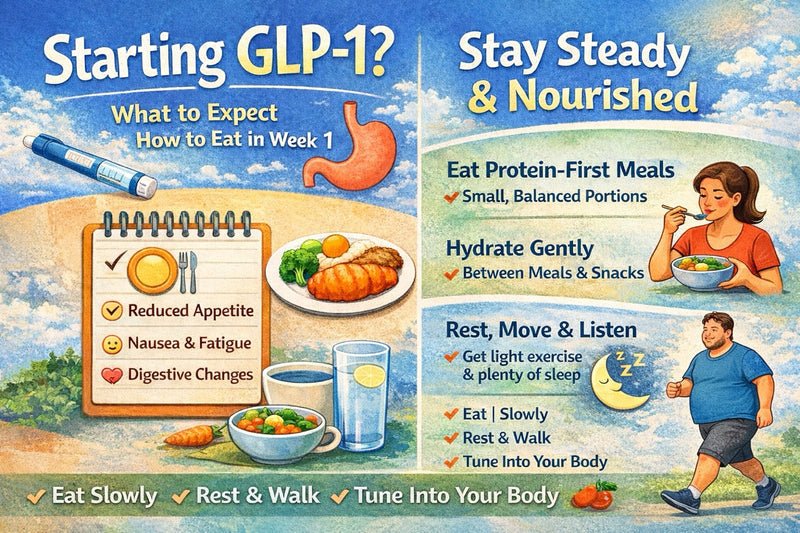
The first week often comes with lower appetite, faster fullness and fluctuating energy. Many people find that small protein meals, gentle hydration between meals, and simple routines help them feel more comfortable and supported during this adjustment phase.
Starting something new can feel uncertain, especially when your body reacts quickly. During the first week on a GLP-1 journey, appetite cues often change before routines change. This guide is here to help you understand what many people are experiencing, how to eat in a supportive way, and how to stay grounded while your body finds its rhythm.
Because the first week benefits from a simple structure
This first week focuses on low-volume, protein-rich meals that support muscle and steady energy without feeling heavy. Maintaining predictable food choices can reduce overeating and help you stay nourished even when hunger is different than usual.
What many people notice in the first week
Experiences vary, but frequently discussed patterns include:
- Lower or inconsistent appetite
- You feel full sooner than expected
- Lower energy some days
- Indigestion if meals are too large or rich
- Nausea
- Constipation
- Craving or aversion to food
These changes are commonly reported and often improve as routines and intake become more consistent.
How to eat during the first week on GLP-1
Prioritize protein first
Many people aim for around 25-30g of protein per meal using foods that are easily tolerated. Options like protein shakes or soft spoon foods can help provide protein without requiring large portions.
Keep portions intentionally small
Low-volume meals are often more comfortable early on. Warm foods, such as high-protein soups, can feel especially supportive when appetite is low. Try to eat every 3-4 hours, even when not hungry and focus on 4-6 small meals or snacks a day.
Hydration between meals
Drinking fluids between meals rather than during meals can help save space in the stomach for food. Try drinking 64–100 oz of water daily. Many people have electrolyte drink mixes on hand to support hydration throughout the day.
Go easy on fiber and fats
Cooked vegetables, soft textures and moderate portions of fat are often easier to tolerate in the first week. Simple meals combined with controlled portions of protein can reduce the guesswork.
Avoid These Foods (Week 1)
- Fried or fatty foods
- Big, bulky meals
- Fizzy drinks
- Snacks high in sugar (may cause nausea or bloating)
A simple 7-day meal structure that supports GLP-1
Use this as a flexible framework rather than a strict plan. Repeat the structure daily and alternate foods as tolerated.
Note: This structure is repeated all seven days. The goal is consistency and comfort, not variety or perfection. Some people prefer to have a small mix of shakes, soups and snacks on hand during the first week to make food choices easier.
Simple shopping focus for the first week
General focus on macronutrients and micronutrients for the first week
Instead of tracking the exact numbers, many people focus on these priorities:
- Protein: supports muscles and recovery
- Carbohydrates: moderate amounts from easily digestible sources
- Fat: included in small quantities for satisfaction
- Micronutrients: sodium, potassium, magnesium and B vitamins for hydration and energy support
Simple shopping list for your first week
Produce
- Zucchini, carrots, spinach
- Bananas or berries in small portions
Protein
- Eggs
- Chicken or fish
- Greek yogurt or dairy-free alternative
- Protein powders, bars or chips
Cabinet
- Stock or soup base
- Olive oil or avocado oil
- Electrolyte drink mixes
A gentle reminder of wellness
Many people find it helpful to drink fluids consistently throughout the day and keep movement light during the first week. Small, consistent habits often feel more supportive than pushing hard early on.
Tips to overcome the most difficult moments of the first week
- Eat slowly and stop when you feel comfortable
- Choose warm, soft foods if digestion is sensitive
- Keep protein options prepared and visible
- Focus on consistency over perfection
- Use light movement, such as short walks, to stay grounded
These are supportive habits, not fixes. It’s normal to adjust as you learn what works best for you.
GLP-1 Week 1 FAQ
Experiences vary, but some people notice that appetite is very low in the first week. A common approach is to use smaller options that contain protein (such as shakes, yogurt-type snacks, or soups) so that you can stay nourished without needing a large meal.
Many people find that a steady pace is easier than large meals—often a few small meals plus a simple snack or two. A common approach is to prioritize protein at every mealtime and keep portions low in volume, adjusting based on convenience.
When fullness happens more quickly, drinking between meals can help save space in the stomach for food. Many people choose steady sips throughout the day and stop liquids during meals to keep meals more comfortable.
Some people notice that fatty, fried, very sugary, carbonated, or large bulk meals feel less comfortable early on. Commonly discussed patterns include sticking with simpler foods, softer textures, and smaller portions, while appetite cues adjust.
If you have ongoing concerns, feel unsure about what is right for your needs, or want personal guidance, talking with your healthcare provider can help. They can advise you based on your health history and goals.
Experiences vary, but you should avoid drinking it on an empty stomach to reduce nausea.
If you’re struggling to meet your nutritional needs, protein powders, bars, multivitamins, meal replacements, and electrolyte drinks can help bridge the gap.
Sources and further reading
This content is for general information and support only and is not a substitute for medical advice. Always talk to your healthcare provider about what is right for you. Nashua Nutrition does not employ medical professionals and does not provide clinical care.
← Previous post
