



Rosemary has been used in traditional hair care for generations. But in recent years, it’s gone from home remedy to clinically studied ingredient—and the evidence behind it is worth understanding.
Here’s what rosemary extract really does in a hair growth formula, who it’s most likely to help, and how to use it properly.
Hair Growth Serum with Redensyl, Procapil, Baicapil (Paraben Free)
Buy Bodywise Hair Growth Serum online. Redensyl✔Procapil✔Baicapil✔Fenugreek✔Moringa✔Clinically Tested✔Silicone, SLS & Paraben Free✔Free Shipping✔
Rosemary extract comes from the leaves of Rosmarinus officinalis. When used in hair care, it’s usually in the form of rosemary oil or standardized extract—concentrated versions of the plant’s active compounds, primarily rosmarinic acid and carnosic acid.
These compounds have two main actions that make rosemary important for hair growth: they stimulate blood circulation in the scalp and have been shown to inhibit DHT binding at the follicular level.
What does DHT have to do with thinning hair?
DHT (dihydrotestosterone) is a hormone derived from testosterone. In women with hormonal imbalances—PCOS, hormonal changes after pregnancy, or genetic susceptibility—DHT can bind to hair follicle receptors and shrink them over time. This leads to thinner, shorter hair growth cycles and ultimately thinning.
Rosemary extract has been studied for its ability to reduce this DHT-follicle interaction at the scalp level. A 2015 clinical study comparing rosemary oil to a common topical hair treatment found comparable results in improving hair count over 6 months—with less scalp itching in the rosemary group.
How does rosemary stimulate hair growth?
There are two main mechanisms:
1. Stimulation of circulation Rosemary applied to the scalp increases microcirculation – the flow of blood to the hair follicles. Better blood flow means more oxygen and nutrients reaching the follicles, which supports the active growth phase (angon phase).
2. Inhibition of DHT in the scalp Compounds in rosemary—particularly carnosic acid—may help reduce the conversion of testosterone to DHT in the scalp and reduce DHT’s ability to bind to follicle receptors. This slows down the follicle shrinking process.
Together, these two actions make rosemary especially useful for thinning hair due to DHT sensitivity or poor scalp circulation – both very common in Indian women.
Hair Growth Serum with Redensyl, Procapil, Baicapil (Paraben Free)
Buy Bodywise Hair Growth Serum online. Redensyl✔Procapil✔Baicapil✔Fenugreek✔Moringa✔Clinically Tested✔Silicone, SLS & Paraben Free✔Free Shipping✔
At what stage of hair loss is Rosemary best?
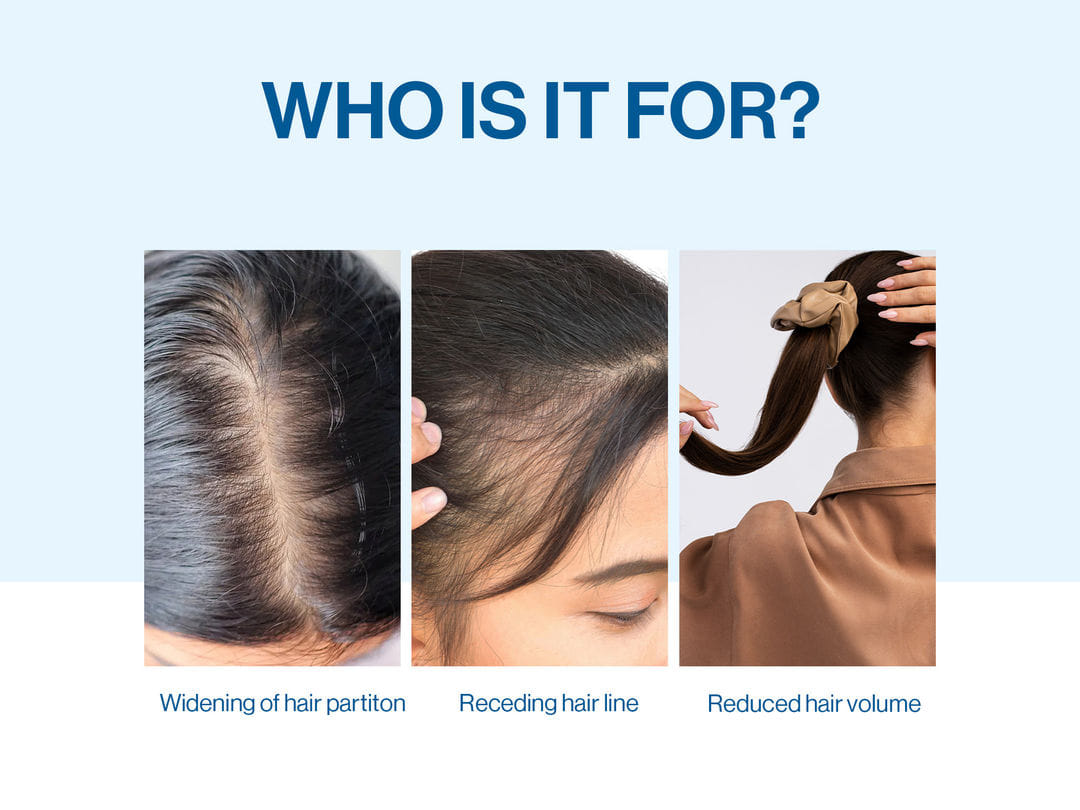
Rosemary works best for thinning hair – where follicles are still active but produce thinner, weaker hair. This is usually what is referred to as Stage 2 hair concerns.
For Stage 1 (general hair loss without visible thinning), an internal approach—biotin, zinc, and essential hair vitamins—is usually the starting point, with rosemary as a supportive topical addition.
For Stage 2 (visible thinning, reduced hair density, scalp becoming more visible), a rosemary-based scalp serum used consistently is one of the most clinically-grounded topical options available over the counter.
How should rosemary be used for best results?
- Form: Scalp serum or roll-on – no shampoo (contact time is too short for rinse-off products to provide substantial benefit)
- Application: Directly to the scalp, not the hair
- Frequency: Daily or twice a day – consistency over several weeks is what delivers results
- Timeline: Most clinical studies use 3-6 months as a minimum period. Month 2 usually shows early results. improvement in visible density by month 4+
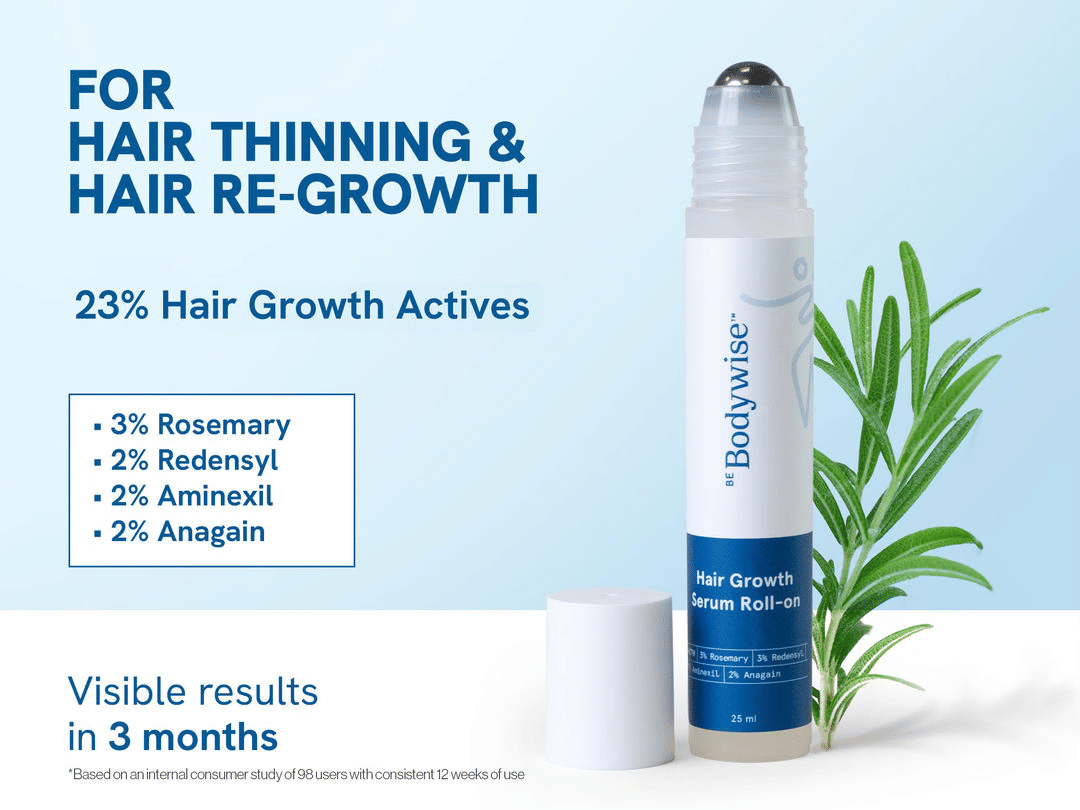
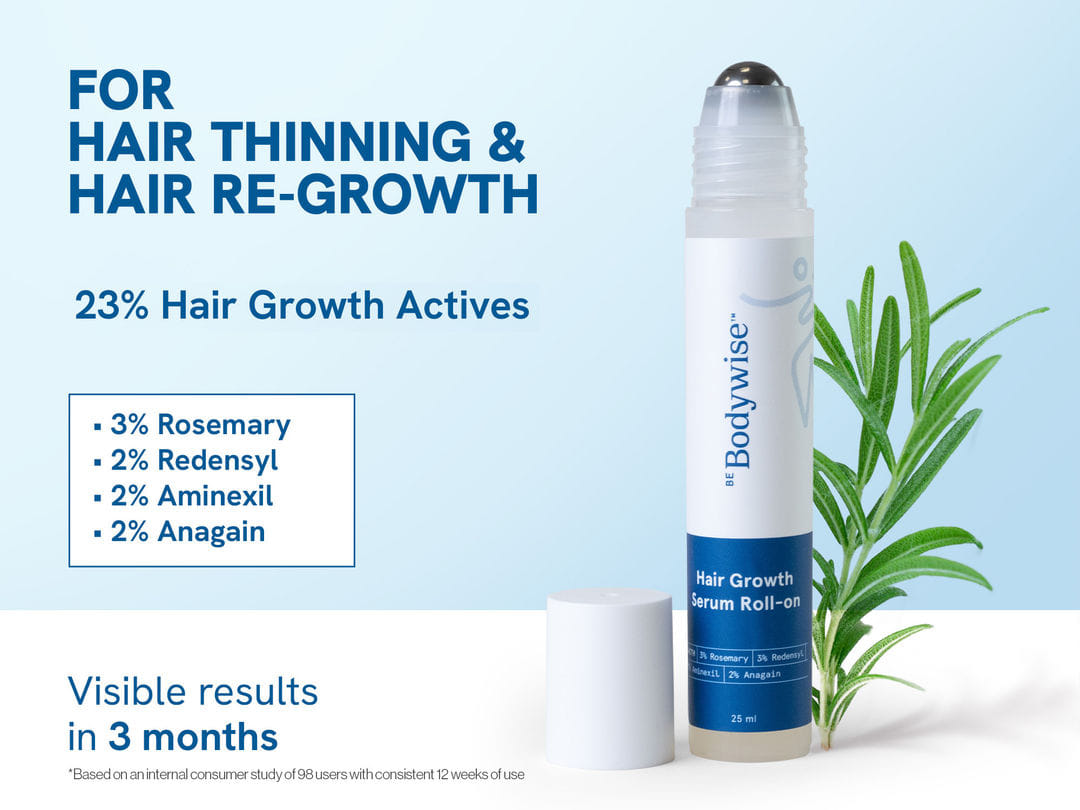
For topically treated thinning hair, a rosemary serum along with complementary actives like Redensyl and Aminexil cover multiple mechanisms at once. Be Bodywise’s Advanced Hair growth serum contains 3% Rosemary, 3% Redensyl, 2% Anagain and 2% Aminexil – a combination of supporting scalp circulation, stimulating follicles and strengthening hair protein. It is paraben-free, sulfate-free, preservative-free, with a roll-on applicator for hassle-free scalp application. The product page recommends consistent use for at least 3 months. Compare the concentrations of active ingredients and the form of administration before choosing any topical serum.
Does rosemary work as well as prescription treatments?
For mild to moderate hair thinning, the clinical evidence for rosemary is encouraging—especially for women who want to start with an over-the-counter, herbal approach.
It is not a substitute for medical treatment when hair loss is severe or has a specific medical cause (thyroid conditions, severe PCOS, autoimmune conditions). In these cases, a dermatologist’s advice is recommended first.
But for many women in their 20s and 30s who are experiencing early thinning or reduced hair volume – consistent topical rosemary for 3-6 months is a legitimate, proven starting point.
How to choose a rosemary hair product
- Look for standardized concentration – 3% rosemary in a leave-on formula is the range studied
- Waiting serum, not shampoo – Communication time matters. Rinse-off products do not provide enough active ingredient
- Check what rosemary it goes with – Redensyl, Aminexil or Procapil in the same formula increases the coverage of multiple mechanisms
- No parabens, no preservatives – especially important for daily application on the scalp
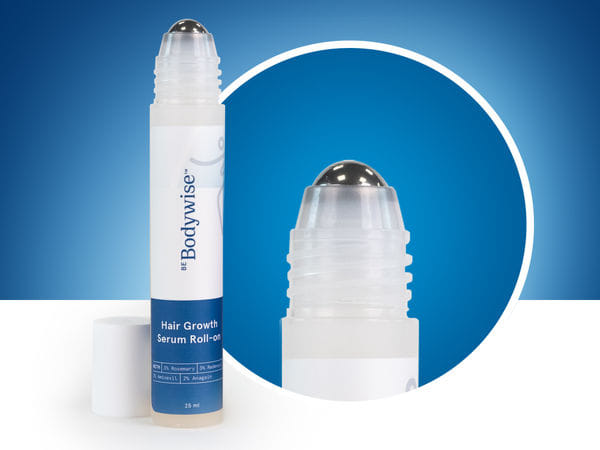
- Roll-on or dropper applicator – Ensures targeted supply to the scalp without product residue on the hair
FAQ
Q: How long does rosemary take to show hair growth results?
Clinical schedules suggest 3-6 months of consistent use. Most women notice a reduction in shedding by the 2nd month and a visible improvement in baby hair growth or density by the 4th month.
Q: Can I apply rosemary oil directly to my scalp?
Pure rosemary essential oil is highly concentrated and can cause scalp irritation when applied undiluted. A standardized serum with standardized rosemary extract is safer and more effective for daily use.
Standardized rosemary extract in topical serums is generally considered low risk, but consult your doctor before using any hair treatment during pregnancy.
Q: Does rosemary work for hair loss caused by PCOS?
Hair loss associated with PCOS is often due to DHT. Rosemary’s DHT-inhibiting properties make it a relevant topical choice, although it works best alongside managing the hormonal status itself.
Q: Can I use a rosemary serum with a regular shampoo?
Yes – the rosemary leave-in serum is compatible with any shampoo routine.
Q: How often should I apply a rosemary serum?
Twice a day is ideal. Once a day is the minimum for consistent results. Applying at night allows more contact with the scalp without interference from styling.
If you’re exploring topical rosemary-based options for thinning hair, it’s worth considering scalp serums with clinically studied concentrations. Explore what’s designed for women’s hair concerns at bebodywise.com
