


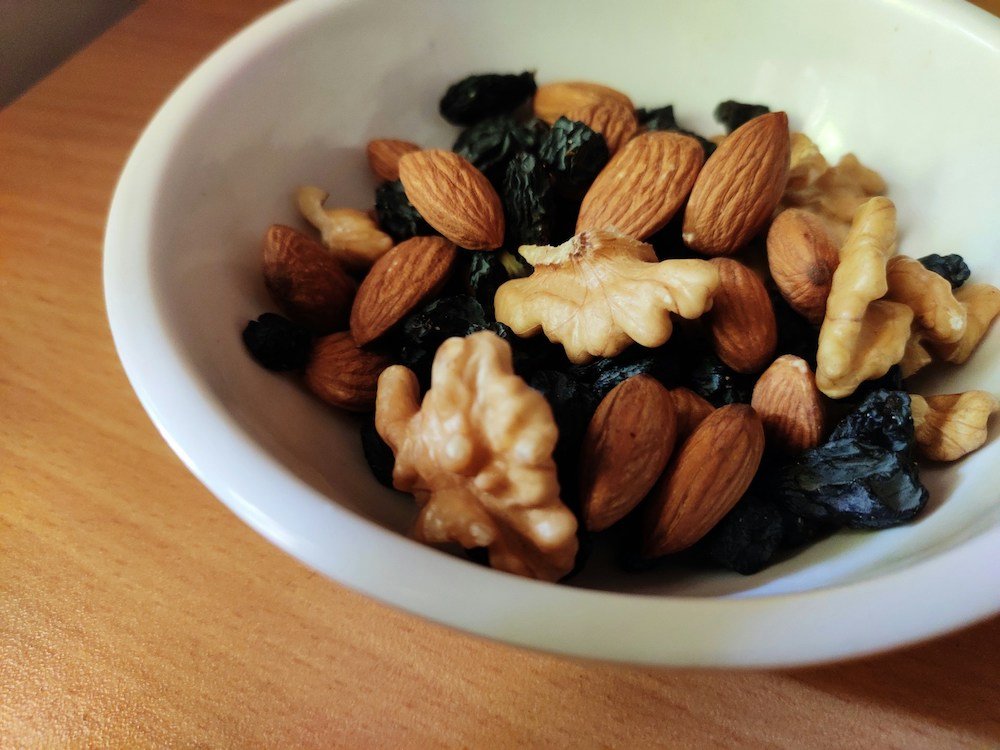
If you’re looking for a food that has a great balance of fat, protein, carbohydrates, and fiber, you can’t do much better than nuts. Read almost any article or study on healthy diets and you’ll find that they all seem to recommend including nuts and seeds.
As long as there are no allergies or sensitivities, nuts can and should be part of a varied and nutrient-dense diet because of both the micronutrients and macronutrients found in them.
There are so many types of nuts, all varying in taste and texture. But they also differ in terms of their nutrient content. All the more reason to eat a wide variety of types of nuts.
This is not difficult to do when you consider that they make great snacks, but they can also be included in recipes like homemade granola and trailmix, saladseven desserts.
Nutrients Nut by Nut
A look at the nutrients found in 100 grams of each nut can help you find the right nuts for your needs or some combination to cover all the bases.
Almonds: The Safe Bet Nut
- 17-14 g of protein
- 3 mg of vitamin C
- 3.5 mg niacin
- 275 mg of magnesium
- 728 mg of potassium
- 3-6 grams of iron
- 31 grams of monounsaturated fat
In case you’ve been living under a rock, you’ve noticed that almonds are everywhere. In our ‘milk’, as sources of protein in bars, in gluten-free baked goods and more.
And for good reason. Almonds are rich in protein, including being rich in the amino acids phenylalanine, alanine, and glutamine.
Compared to other nuts, it is also high in potassium, a critical electrolyte that helps cells absorb water. They also have more fiber than other nuts with pistachios coming in second.
Almonds are incredibly versatile, thanks to their firm texture and creamy flavor, and they tend to cost less than the more expensive cashews and pistachios.
Cashews: The Electrolyte Nut
- 17-19g of protein
- 12 mg sodium
- 292 mg of magnesium
- 660 mg of potassium
- 3-6 mg of iron
- 7.7 g saturated fat
Cashews tend to be known for two main things, their steep price and their creamy texture. It is this texture that makes them a great substitute for dairy because they can be soaked and blended to make cashew milk or cream.
But what it should be equally known for is how high it is in minerals like sodium, magnesium and potassium. These minerals act as natural electrolytes, helping with hydration and making them a great post-workout snack.
Cashews also contain as much protein as almonds.
Hazelnuts: The oily nut
- 14-15g of protein
- 20 IU of vitamin A
- 0.2-0.6 mg of vitamin B6
- 3.5-15 mg of vitamin E
- 514-680 mg potassium
- 45 grams of monounsaturated fat
For some reason, hazelnuts are not as popular in the US as they are in other countries. In Europe, they are much more common, especially in Italy and Turkey.
But we should give these tiny nuts a chance, especially considering how much fat and vitamins they contain.
Hazelnuts contain more monounsaturated fat than any other nut. And they are rich in fat-soluble vitamin E, as well as vitamin D, which is not common in most nuts.
It also contains a decent amount of vitamin E and potassium.
Peanuts: The Overachieving Nut
- 19-22 g of protein
- 415 IU of vitamin A
- 0.87 mg thiamine
- 1.7 mg of vitamin B6
- 51 mg of folic acid
- 642-1025 mg potassium
If you’ve ever complained about the high price of peanuts (and who could blame you, they’re pretty expensive), there might be a good reason. Despite the hit to your wallet, pistachios are still the best bang for your buck.
Compared to other nuts, peanuts win in several nutrient categories, including thiamin, vitamin B6, and potassium. Not to mention it’s almond-necked in protein.
And to show it off, peanuts are even rich in nutrients not usually associated with nuts, like vitamin A and folate.
Brazil Nuts: The Chill Nut
- 14.5 g of protein
- 376 mg of magnesium
- 27.4 g of monounsaturated fat
Brazil nuts stand out as soon as you see them. In a mix of nuts, they look big. But think of them as the gentle giant. While Brazil nuts aren’t as rich in many nutrients as others, they win hands down when it comes to magnesium.
As magnesium is a mineral known for relaxation, muscle relaxation and sleep regulation, Brazil nuts make a great evening snack or for kids with growing pains.
Walnuts: The mineral nut
- 14-16g of protein
- 0.5 mg of vitamin B6
- 2.54 mg of copper
- 47 grams of polyunsaturated fat
The walnut diet is kind of funny. Most nuts have more of some nutrients and less of others. But walnuts are uniquely rich in most minerals. It is not the highest or lowest in any of the minerals.
But they have a good amount of sodium, magnesium, potassium, calcium, zinc and iron. The one mineral they dominate is copper, which supports the circulatory and immune systems.
Walnuts are like a perfect little pill with lots of minerals. Pretty smart for a nut that actually looks like a brain.

Get the most out of your nuts: Raw, Roasted, Sprouted and more
Although we don’t always associate nuts with antioxidants, they can actually be quite high in phenolics. Unfortunately, Most of the antioxidants in nuts are found in the skinor pellet, of the nut, which is often removed during processing.
Roasting allows the nuts to last longer and withstand global shipping. Many people also prefer the taste and texture of roasted nuts. But heating nuts may not be as good for the nutritional profile.
Baking can also deplete antioxidants which naturally exist. And pistachios are sometimes blanched for whiter shells, a process that additionally removes antioxidants.
Research shows that Roasting nuts can even reduce the amount of protein and fat in some nuts.
Nut sprouting, on the other hand, can help increase the bioavailability and digestibility of nuts.
Germination can only be done with raw nuts and requires soaking the nuts before allowing them to germinate naturally. This must be done carefully as there is a small risk of mold and bacteria spreading.
When done right, there are signs that vegetation reduces the amount of natural acidwhich can inhibit metal absorption. This can also improve protein digestion.
Nuts from ancient times to modern nutrition
Nuts are one of man’s oldest food sources. We were eating nuts for at least hundreds of thousands of years. And even then, we ate a range of things from almonds to peanuts.
There’s good reason to keep the tradition going thanks to nuts’ protein, fiber, fat, minerals and vitamins. And these days, we’re lucky to find a huge variety of nut options in any grocery store.
They’re great on the go or part of a complicated recipe. They are part of every culture’s diet and should be part of every healthy diet.
If you are interested in an education and career in nutrition therapy, but are not sure if the Nutrition Therapy Institute is right for you, see testimonials from current and former students.
We are so proud of the experience we provide to people who want to change their lives and the lives of those they work with.
About the author: Maya Strausberg earned her Master Nutrition Therapist certification from NTI before starting her private nutrition therapy practice. She now offers writing and editing services to nutritionists and other health professionals around the world through her business, Family Tree Nutrition.
Pictures:
- Photo by Pratik Bachhav on Unscrew
- Photo by Towfiqu barbhuiya on Unscrew
- Photo by Gerardo Ramos on Unscrew
