


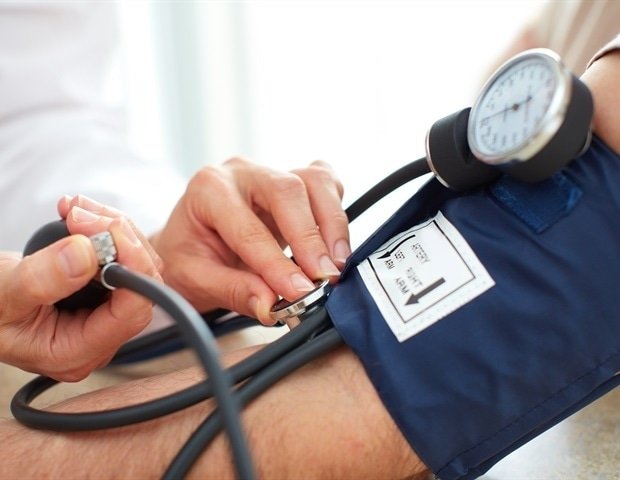
The patient initially came to see Mark Supiano in 2017 because her family was concerned about her short-term memory loss.
While taking her history and vital signs, Supiano, a geriatrician at the University of Utah, saw a troubling signal: Her blood pressure was 148/86, above normal, despite the fact that she was taking two drugs intended to lower it. “Clearly it was too high,” he said recently.
Several factors could have contributed to the high reading, including the anti-inflammatory medication the 78-year-old woman took for arthritis pain, a high-sodium diet and a lack of regular exercise. He had also told Supiano that he usually drank a few glasses of wine every night.
After Supiano discussed ways to reduce the risk, the woman and her husband hit a gym. She stopped taking the anti-inflammatory and cut back on salt and alcohol, bringing her systolic blood pressure readings into the 130 to 140 range — still high blood pressure, according to guidelines issued by the American Heart Association and the American College of Cardiology later that year, but more acceptable. (Systolic is the top number in the blood pressure ratio and the most clinically significant number.)
By 2019, however, the patient was diagnosed with mild cognitive impairment and medical evidence was emerging of a link between hypertension (the medical term for high blood pressure) and dementia. “I wasn’t as aggressive as I should have been,” Supiano recalled. He added a third high blood pressure medication to the woman’s regimen, and her readings dropped to 120 or lower.
Changing guidelines for blood pressure control may remind older adults of a dance craze from their youth, limbo. As Chubby Checker once said, “How low can you go?”
For more than 25 years, a reading of 140/90 or lower was considered normal, according to the AHA/ACC guidelines. However, the 2017 update introduced significant changes, supported by results from the landmark SPRINT trial in adults over 50 who were at high cardiovascular risk.
The SPRINT trial found that intensive treatment aimed at reducing the systolic number below 120 reduced the risk of heart attacks, strokes, other cardiovascular disease and total mortality so substantially that the researchers stopped the study early.
It was unethical, they decided, to deny half the trial participants the benefits of intensive care. The 2017 guidelines therefore recommended medication for people with systolic blood pressure above 130.
The most recent revisions, issued last year, encourage even tighter scrutiny. They urge patients at cardiovascular risk to strive for systolic readings below 120, and also call that goal “reasonable” even for those not at high risk. Readings that were considered normal not too long ago are now defined as hypertension.
Blood pressure typically rises with age because “as the arteries harden, the heart has to pump harder,” said Erica Spatz, director of the preventive heart health program at Yale School of Medicine. From 2021 to 2023, about two-thirds of adults over age 65 had hypertension, according to the then operational definition.
But the recent revisions could “identify that many more people have high blood pressure,” said Rita Redberg, a cardiologist at the University of California-San Francisco.
For Supiano, recent studies in the United States and China showing a cognitive benefit to lower readings “tipped the scale” for older adults. “What’s good for the heart is good for the brain,” he said, calling these findings “a lever to get people to pay more attention to their blood pressure. They may not want to live longer, but they want to retain their cognition longer.”
Almost all major medical associations, including the American Geriatrics Society (Supiano is the organization’s board chairman), have endorsed the latest guidelines.
“I was lenient with a lot of my older patients,” said John Dodson, a cardiologist and researcher at NYU Langone Health. “If I over-treated the hypertension, bad things would happen.”
Blood pressure that drops too low – hypotension – can cause dizziness and fainting, or injuries from falls.
Now, Dodson said, “I treat my older patients more aggressively.” Studies have shown that treating high blood pressure benefits even the frail elderly. And while older people in the SPRINT trial had more fall injuries, the rate was no higher in those who received intensive treatment than in those who received standard treatment. Among those over 75, it was about 5% for both groups.
Another major change: The new guidelines recommend home monitoring.
“Blood pressure is tricky,” Spatz pointed out. “It varies throughout the day, depending on whether a person is just waking up or has just eaten or it’s hot outside.” Systolic readings can bounce around 30 points or more in a day.
And they are almost always higher in a doctor’s office. “I don’t want to put too much stock in one reading,” Spatz said.
“Maybe the patient has white-shirt syndrome,” she added, referring to stress about doctors and tests, “or they got into a fight with the parking attendant” on the way.
He asks patients to record their blood pressure twice a day for a week or two before their appointments. Some doctors prescribe 24-hour home monitoring.
Will patients adopt home monitoring and more aggressive treatment? Cardiologists argue that high blood pressure, almost always asymptomatic, remains under-treated despite newer guidelines.
Price is not likely to present a barrier. Most patients need two or three drugs to lower blood pressure, but as generics they are “cheap, about $5 a month” and rarely interact with other medications often prescribed for older adults, Supiano said. A blood pressure monitor for home use costs $35 or more for those who transmit digital data.
While some side effects are serious — a fall can be life-changing — most complications “fortunately are transient and reversible and rather mild,” he said.
However, the guidelines also have skeptics. Redberg, for example, advises elderly patients on diet, exercise and weight loss, but does not urge them to start medication to lower a systolic reading of 135 to below 120.
They already seem overly concerned about their blood pressure, he said, adding, “I encourage them to go out and have fun.”
“Take a lesson! Go to a museum!” she said. “You can’t do that if you’re at home taking your blood pressure five times a day.”
While trials and guidelines address benefits for the population as a whole — even small reductions in dementia would have a huge impact — they are not useful for predicting individual outcomes. The PREVENT calculator, used to measure whether someone will see cardiovascular benefits from treating hypertension, has not been validated for people over age 79 and does not take cognitive benefits into account, Supiano noted.
For people with other serious illnesses—cancer patients or vulnerable nursing home residents with dementia, for example—blood pressure control may be much lower on the list of concerns.
Timing is also a factor in weighing the risks against the benefits. A meta-analysis of elderly patients by Sei Lee, a geriatrician at UCSF, and colleagues found that for 200 patients intensively treated for hypertension, it would take 1.7 years to prevent a single stroke.
Reducing very high blood pressure is simpler and more important than trying to lower 130 below 120, Lee added. “You would have to work much harder, add a third or fourth drug, and the risk of side effects is higher.”
Supiano’s 78-year-old patient achieved this goal and did well for six or seven years. Then, as with many patients with mild cognitive impairment, he began to decline and was eventually diagnosed with Alzheimer’s.
Given what the researchers report about the cognitive benefits of treating high blood pressure, “maybe they gave her another good couple of years,” he thought. “Maybe it delayed the development.” Or maybe, he added, he should have started intensive care earlier.
New Old Age is produced in partnership with The New York Times.
