Video conversations with Judit Sándor, Róza Zolnai and Balázs Locher
Eszter Kismődi, Hungarian Citizen, International Human Rights Lawyer, CEO of SRHM
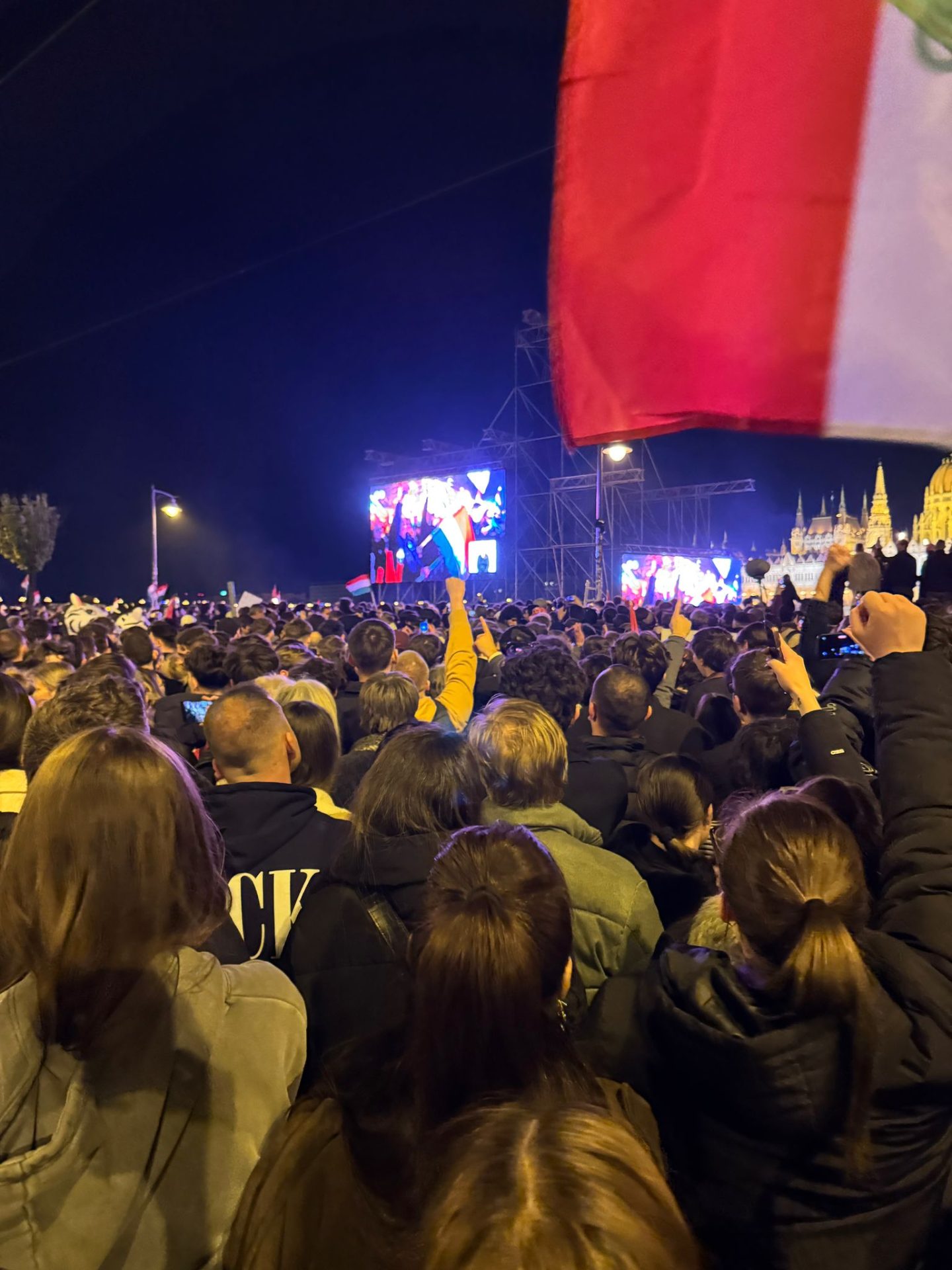
I am writing from Budapest, shortly after the announcement of the results of the Hungarian elections of April 12, 2026. I am Hungarian and this is a deeply personal and deeply professional moment for me. Voter turnout reached 77.8%, the highest ever recorded in a Hungarian election and the highest turnout since the first free elections in 1990. According to the announced results, voters gave a decisive mandate to Péter Magyar and the Tisza party, founded just two years ago, which received more than 50% of the vote and secured a two-thirds majority in parliament. In Hungary, the two-thirds parliamentary majority is particularly important, as it allows the ruling party to amend the constitution and adopt key laws without requiring support from opposition parties. Fidesz, led by Viktor Orbán, received less than 40% of the vote after 16 years in government.
I was 16 years old in 1989 when Hungary’s state socialist regime came to an end and the transition to democracy began. Just a few years later, I was part of the first generation that began to contribute to building democratic institutions in Hungary. This historical moment shaped the way I understand law, human rights, and the role of public institutions—including health systems—in promoting dignity, equality, and autonomy.
For the past 16 years, the Orbán government and the Fidesz party have pursued a political plan that Viktor Orbán has explicitly described as building an “illiberal state”. During this period, Hungary has undergone extensive constitutional, legal and institutional transformation, including the adoption of a new constitution (Basic Law) in 2011, repeated constitutional amendments and reforms affecting the judiciary, electoral system, media regulation and public administration. These changes have resulted in significant concentration of political power, weakening of institutional checks and balances, restrictions on judicial independence, increased government influence in the media landscape, restrictions on civil society organizations and restrictions affecting academic freedom. Policy developments during this period also reshaped gender equality frameworks, the protection of minority rights, and public discourse on sexuality and family life, including the abolition of accredited gender studies programs, restrictions on legal gender recognition, and a constitutional family policy framework based on a narrow definition of family. Patterns of public procurement and the allocation of state resources have also contributed to the concentration of economic influence among actors closely linked to political power.
These broader structural developments shape the environment in which public agencies, including health systems, operate and affect the conditions under which sexual and reproductive health and rights can be protected and realized. Hungary’s progress over the past decade and a half has therefore been closely watched internationally as part of wider debates about democratic governance, rule of law standards, human rights protection and institutional accountability both in Europe and globally.
 Today, my son is 16 years old — the same age I was in 1989. He was born in 2010, when the Orbán era began, and his entire life unfolded during this political period. Although he grew up in Switzerland, he remains deeply connected to Hungary and in many ways represents a generation whose understanding of democracy has been shaped by developments unfolding across the border. This contrast is particularly striking at this time. It invites reflection not only on the conditions in which young people are growing up today, but also on what these last 16 years mean more broadly for democracy, gender equality, human rights and the functioning of public institutions, including health systems. The outcome of these elections may therefore have significance beyond Hungary, resonating with a generation of young people who experience democracy not only as a national system of government, but as a shared global value shaped by interconnected political realities.
In this context, I recorded a series of conversations in the hours after the election results were announced, combining legal, genealogical and civic perspectives on this political moment and its implications for democracy, human rights and public institutions.
Video recordings of these conversations are presented below.
It’s an honor to chat Professor Judit SándorProfessor of Political Science and Law at the Central European University (CEU) in Vienna. Professor Sándor is a leading scholar working at the intersection of law, policy, bioethics and human rights. She is also director of the Center for Ethics and Law in Biomedicine in Budapest. Her work has made significant contributions to understanding how democratic governance, legal frameworks and public institutions shape issues of dignity, equality and justice.
The discussion also includes perspectives from a younger generation. Rosa ZolnaiHungarian citizen, University College London (UCL) student and former Sexual and Reproductive Health (SRHM) intern, reflects on how political developments in Hungary are perceived by young people whose formative years have taken place during this period of political transformation. The 2026 election saw a particularly strong turnout among younger voters, many of whom have never seen a government other than the one led by Viktor Orbán. Their high level of commitment significantly influenced the election results, marking this moment as a defining political moment for a generation whose political consciousness developed entirely in the last 16 years.
Finally, I’m talking to Balázs Lochermy son, who at 16 belongs to a generation that has grown up completely in these last 16 years. Having grown up in Switzerland as a Hungarian-German citizen, this election was his first direct experience of what it means to exercise the right to vote. Although he is not yet eligible to vote, he accompanied me, his brother and his grandparents to vote. His reflections offer the perspective of a young global citizen observing how democratic participation is experienced across generations and what democracy can mean for young people whose identities and futures are shaped in national contexts.
Together, these talks explore how the results of the 12 April 2026 election can be understood in light of Hungary’s democratic trajectory since 1989, what has characterized the last 16 years of rule, and what opportunities or challenges may lie ahead. They also reflect on the wider significance of this political moment beyond Hungary, as debates about democracy, rights and public institutions continue to resonate globally.
These talks are also available on the SRHM Podcast, streaming continuously Spotify and Apple Podcasts.