



If you eat pretty much the same, exercise regularly and still notice the scale creeping up, it can feel incredibly frustrating. For many women in midlife, the problem isn’t just weight gain. It is the feeling that their body no longer responds as it used to.
It’s easy to blame yourself for this. But for many women, this stage isn’t about a lack of discipline. It’s about recognizing that the body is going through a natural transition — one that many women describe as a “second adolescence”. Hormones change, metabolism changes, sleep can become less predictable, and the familiar advice to “eat less and move more” can start to feel incomplete.
What really changes in middle age?
During perimenopause and menopause, changes in estrogen can affect how the body stores fat, regulates appetite, and uses energy. These changes are often associated with increased abdominal fat and greater resistance to weight loss over time. At the same time, lean muscle mass may decrease and recovery may be slower.
Another factor that deserves more attention is the gut microbiome. The intestine is not only involved in digestion. It also plays a broader role in appetite signaling, energy harvesting, gut barrier function, and metabolic balance. This means that weight gain in middle age is not just a story about calories. It is also a story about physiology.
Understanding these biological changes can be helpful because it shifts the conversation away from blame and toward a more supportive, realistic approach to weight management.

Because a more supportive approach starts from within
When women feel frustrated with midlife changes, the instinct is often to try harder—cut more calories, add more cardio, fight fatigue. But in many cases, a more sustainable strategy starts with supporting the body from within.
That’s where it is gut-metabolism axis becomes relevant. When the gut microbiome is better supported, it can help make healthy habits more effective and less exhausting to maintain.
Digestive comfort matters here too. For women navigating appetite changes, metabolic changes, or even discussions related to GLP-1, gastrointestinal distress can make staying consistent more difficult. Within a broader formula designed to support metabolic and digestive balance, strains such as HN019 may add value for digestive support, with research linking the strain to gut comfort, active regularity, and functional gastrointestinal support.

A smarter way to support metabolism in middle age
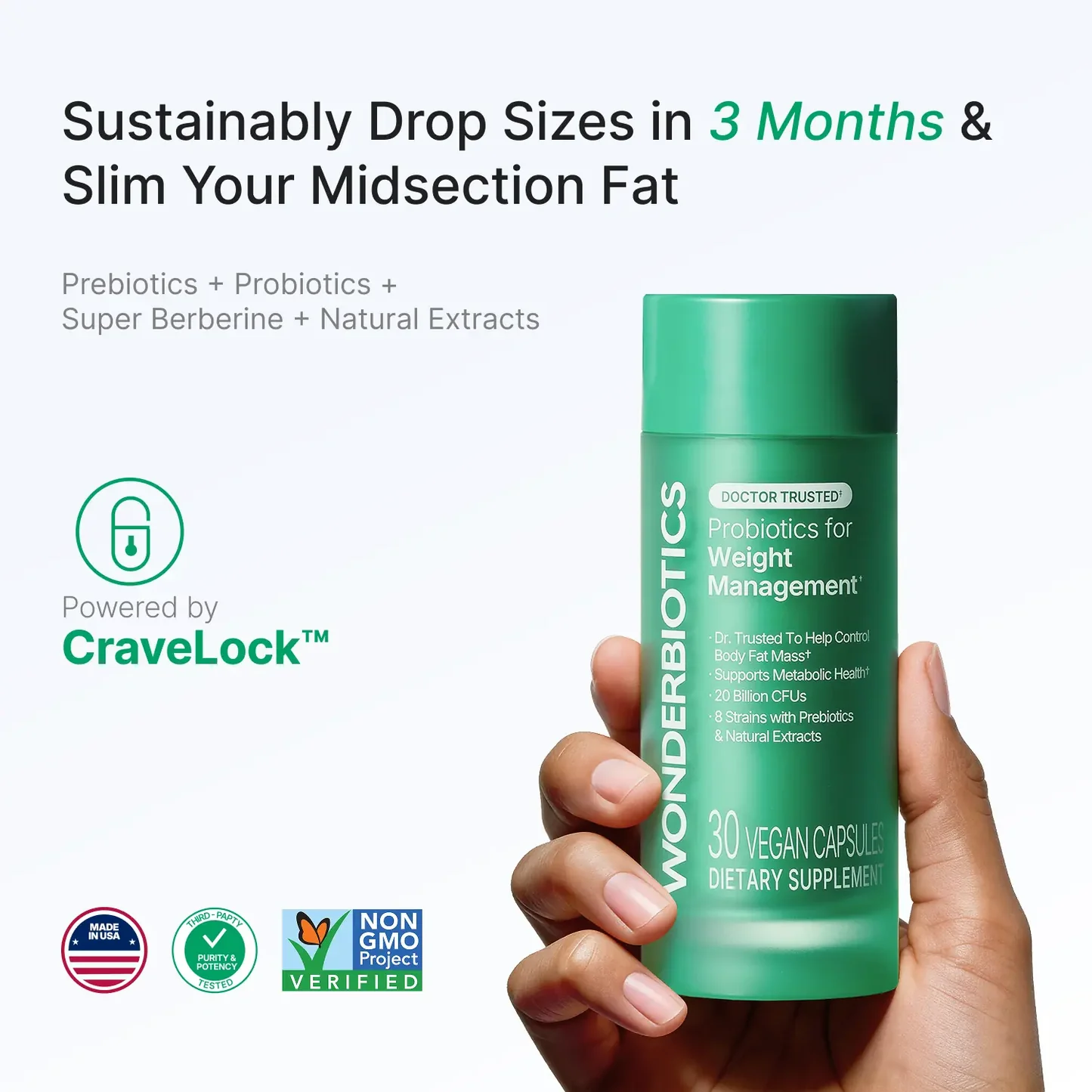
An example of a more targeted approach comes from WONDERBIOTICS Probiotics for Weight Managementa nutritional supplement based on microbiome science for adults seeking weight management support, with particular relevance for women navigating metabolic change in midlife.
Rather than relying on vague probiotic language, the formula emphasizes Identity verified, clinically studied ingredients.
In the center of the press is B420™a probiotic strain supported by 30 clinical studies and 6,248 people. In human studies, B420™ has been linked to supporting healthy body composition—including body fat mass and waist circumference—as well as intestinal barrier integrity over time[1]. In a crowded class of probiotics, this kind of strain specificity matters.
The formula also includes Dihydroberberinea next generation form of berberine with 5x higher bioavailability than standard berberine. It is included to support healthy blood sugar levels already within the normal range as part of a broader metabolic support strategy.
Eriomin® adds another layer of component-level support. Clinical studies have associated it with increased endogenous GLP-1 (+17%) and adiponectin (+19%), both of which are related to appetite and metabolic signaling.
At its core, the formula’s clinical research foundation includes 624 human clinical studies involving 44,692 people. It also draws on scientific guidance from experts in microbiome science, microbial ecology and functional ingredients, reinforcing an approach built around real strains. Real Studies. Actual Truth.
Working with your body, not against it
Weight gain in middle age does not reflect weak willpower. Most of the time, it reflects real biological change. When these changes are understood—and supported in a way that feels aligned with the body—progress can become more realistic and less frustrating.
The most useful message is also the most honest: it’s not about extremes or overnight results. It’s the support option that works alongside healthy eating, regular exercise and consistency over time. For many women, this shift—from punishment to physiology—may be the most significant change of all.
For readers who want to explore the topic further, WONDERBIOTICS offers a Personalized Weight Management Quiz and one free WONDERBIOTICS Weight Management Compendium designed to make the science of microbiome-based metabolic support easier to understand.
*These statements have not been evaluated by the Food and Drug Administration. This product is not intended to diagnose, treat, cure or prevent any disease.
[1]Stenman LK, Lehtinen MJ, Meland N, et al. Probiotic With or Without Fiber Controls Body Fat Mass, Associated with Serum Zonulin, in Overweight and Obese Adults-Randomized Controlled Trial. EBioMedicine. 2016? 13:190-200.
Refusal
The Content is not intended to be a substitute for professional medical advice, diagnosis or treatment. Always seek the advice of your doctor or other qualified health care provider with any questions you may have about a medical condition.
